

Towards an Architecture of Emotions
How do we feel, remember and dream space?
This is the question the philosopher Gaston Bachelard asked in his 1957 study The Poeticsof Space.
Buildings are not neutral containers shaped by pure functionality: the forms we inhabitand the objects we choose influence the pace of our existence and quietly shape our wayof being.
The home, in particular, is the first configuration our inner dimension takes on. Space, as itappears to us, is charged with sentimental value: the familiar perimeter encloses andprotects us within its boundaries, allowing us to develop the sense of security that willstay with us throughout our lives.
La casa, in particolare, è la prima configurazione che la nostra dimensione interiore viene ad assumere. Lo spazio, così come appare, risulta investito di valenze sentimentali: il perimetro familiare ci chiude e protegge dentro i suoi confini, consentendoci di sviluppare il senso di sicurezza destinato ad accompagnarci per tutta la nostra vita.

Inhabiting Memories
Bachelard explores the emotional side of architecture and design, reflecting on thecapacity of objects to activate emotional and dreamlike tones.
The building we live in does not merely shelter our body from cold and rain; thefurnishings we surround ourselves with do not respond only to our practical needs, butinfluence our behavior and the development of that rêverie in which we drift for so muchof our lives.
Translator’s note: the Italian source contains a stray fragment here (“…e psicologica, nellaquale materia, luce, paesaggio e percezione contribuiscono alla costruzione dello spaziovissuto.”). If you want to keep it, a possible rendering is: “…a psychological dimension inwhich matter, light, landscape and perception contribute to the construction of livedspace.”
Exhibiting Space
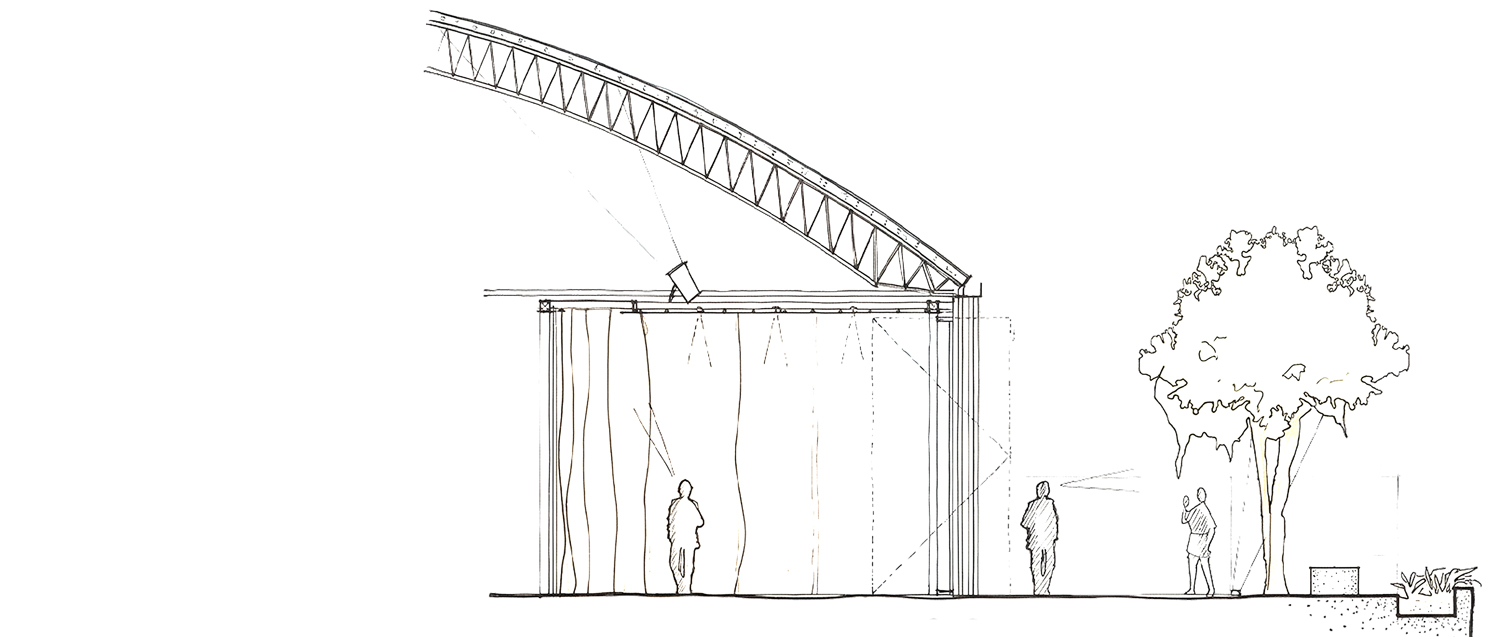
Intimate perception is not exclusive to the domestic environment: a corporate building oran exhibition space can also become places where emotions take shape.
A display that does not merely arrange objects in space is able to guide the gaze andperception, offering new stimuli to our imagination. Light, materials, proportions, silencesand thresholds compose an unspoken narrative, made of sensations rather than words.
Crossing a room, pausing before an object or encountering an unexpected space areactions made possible by space itself, in order to allow us to step out of space, towards adreamlike dimension where reality and imagination overlap.
Every space can thus become a form of inner storytelling: from the home to the exhibitionspace, from the intimacy of the nest to the opening towards the landscape, architecturedoes not merely define a place, but creates the conditions for something to be felt,imagined and ultimately remembered.
To inhabit, then, also means to let oneself be inhabited by space, allowing matter, light andform to enter our experience and become part of our memory. Perhaps this is wherearchitecture finds its deepest dimension: not in simply building places to pass through,but in creating spaces capable of remaining inside us.
A staircase, a bathroom, a wardrobe can become places of memory, just like a dark corneror a bare room. The lesson Bachelard offers is that, at least in part, we have the possibilityof drawing the map of our own soul.
The Project Between Space and Imagination
One architect who recognized in Bachelard an important reference for his ownelaboration of existential space was Christian Norberg-Schulz. The example that best expresses this philosophy is Villa Italiesin, in Porto Ercole.
The summer residence of the Norwegian architect embodies a conception of architecturefounded on the emotional experience of space. The 1960 project reflects the distinctionbetween an internal structure, conceived as a protective and intimate “nest”, and anexternal structure conceived instead as a tension towards the infinite and an opening tothe landscape.
This duality recalls Bachelard’s reflections in The Poetics of Space, according to which thehouse is at once a place of protection, memory and interiority, and a space capable ofopening itself to the imagination. Architecture thus goes beyond its purely functional andconstructive dimension, transforming itself into a sensory experience.

A Continuous Journey
Stay with us. Through these News and Insights, we will explore the inspirations and reflections that lie beneath the fascinating world of interior design.